The Difference Between Notarization, Apostille, and Federal Authentication
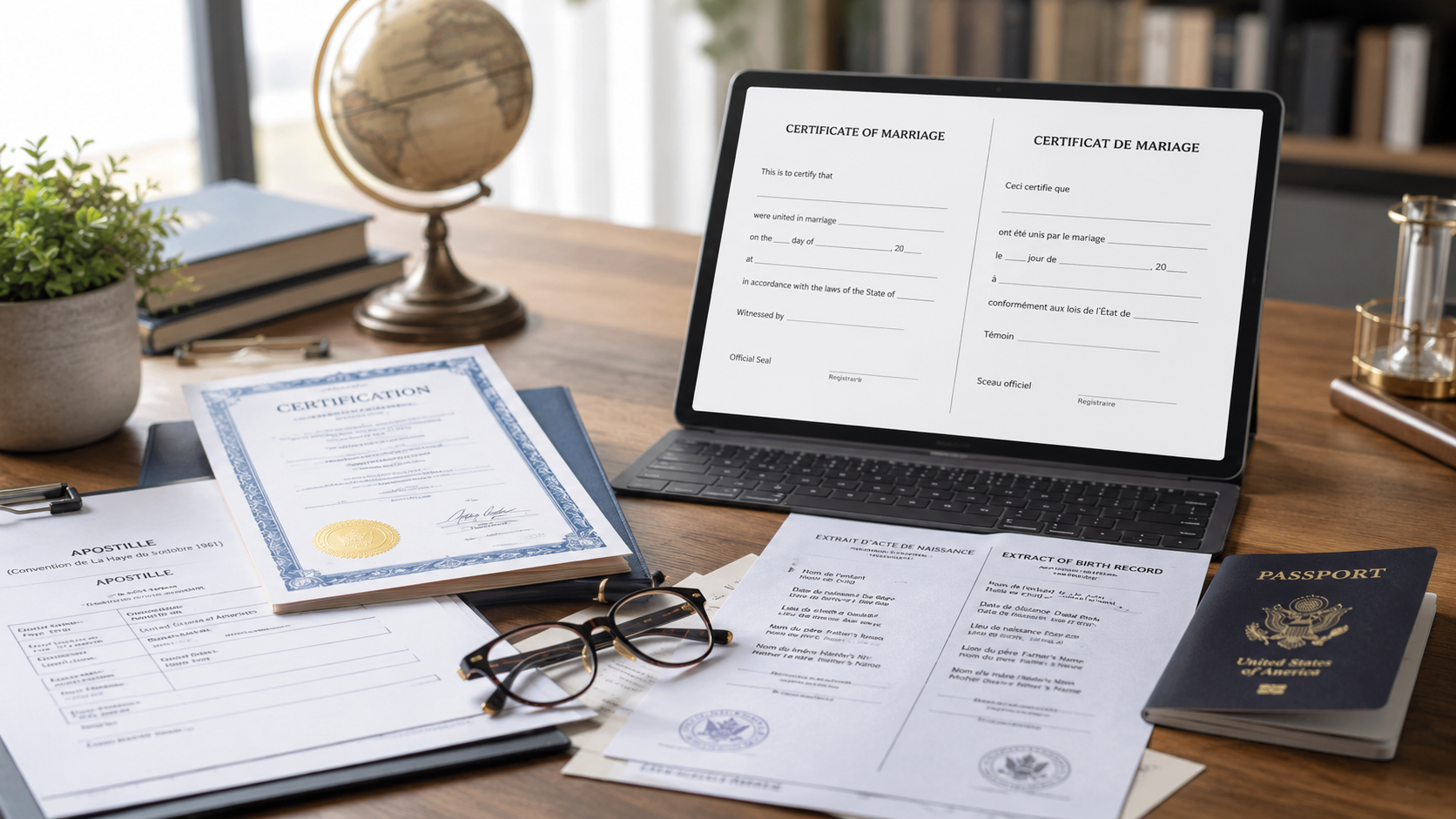
When preparing documents for official use, many people hear the terms notarization, apostille, and federal authentication and assume they all mean the same thing.
They do not.
Each step serves a different purpose, and using the wrong process can lead to delays, rejected documents, extra fees, and missed deadlines.
At
ANF Signings Notary & Apostille Services, we help clients understand what their documents need before they submit them incorrectly. Whether your document is for travel, immigration, school, marriage abroad, employment, business, or legal matters, knowing the difference between these services can save you time and stress.
What Is Notarization?
Notarization is the process where a notary public verifies certain details connected to a document signing.
Depending on the document and the type of notarization required, the notary may confirm the signer’s identity, willingness to sign, awareness of what they are signing, or acknowledgment of a signature.
Notarization is commonly used for:
- Power of attorney documents
- Affidavits
- Business documents
- Real estate documents
- Travel consent forms
- Legal forms
- Certain school or employment forms
It is important to understand that notarization does not make a document valid for international use by itself. It also does not certify the content of the document. Notarization usually verifies the signature or notarial act, not whether the document will be accepted by a foreign country or agency.
What Is an Apostille?
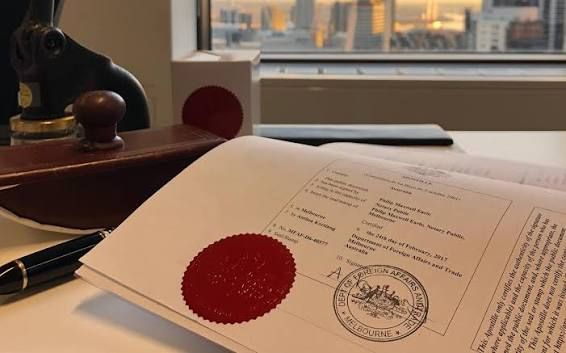
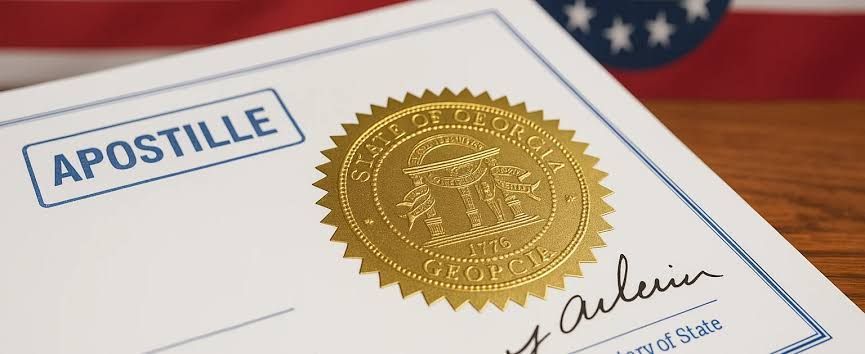
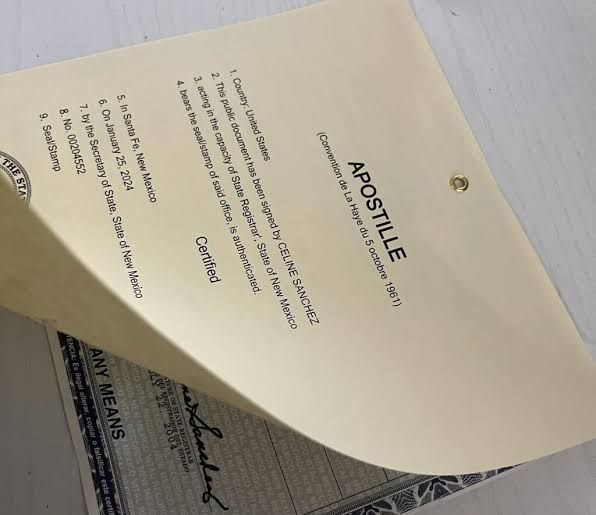
An apostille is a certificate used for documents that will be presented in another country that is part of the Hague Apostille Convention.
In simple terms, an apostille helps verify the authority, signature, or seal connected to a public document so it can be accepted internationally.
Apostilles are often needed for documents such as:
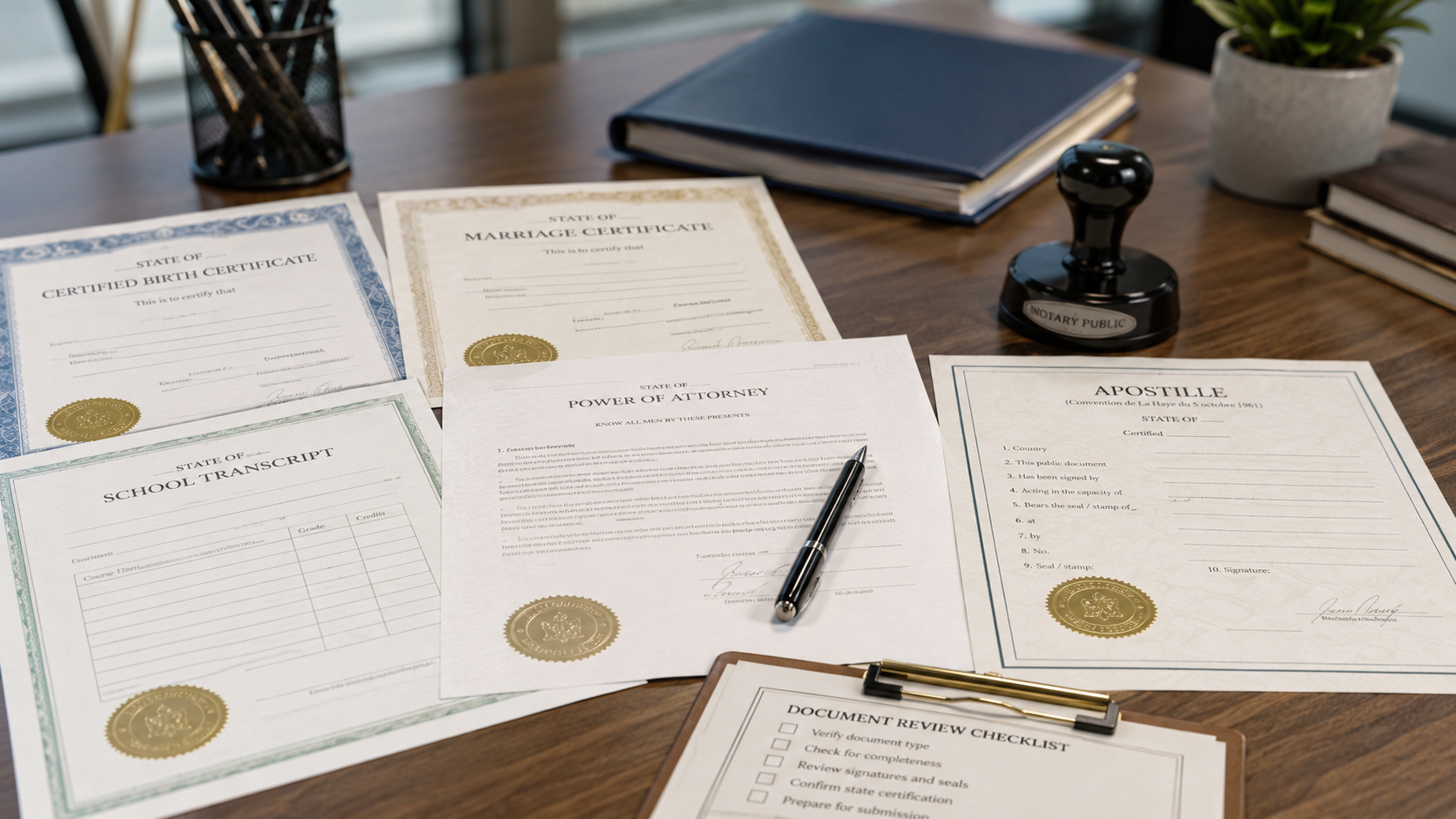
- Birth certificates
- Marriage certificates
- Divorce decrees
- School records and diplomas
- FBI background checks
- Power of attorney documents
- Business documents
- Adoption documents
- Immigration-related documents
The apostille process depends on several factors, including the document type, the state or agency that issued the document, and the destination country where the document will be used.
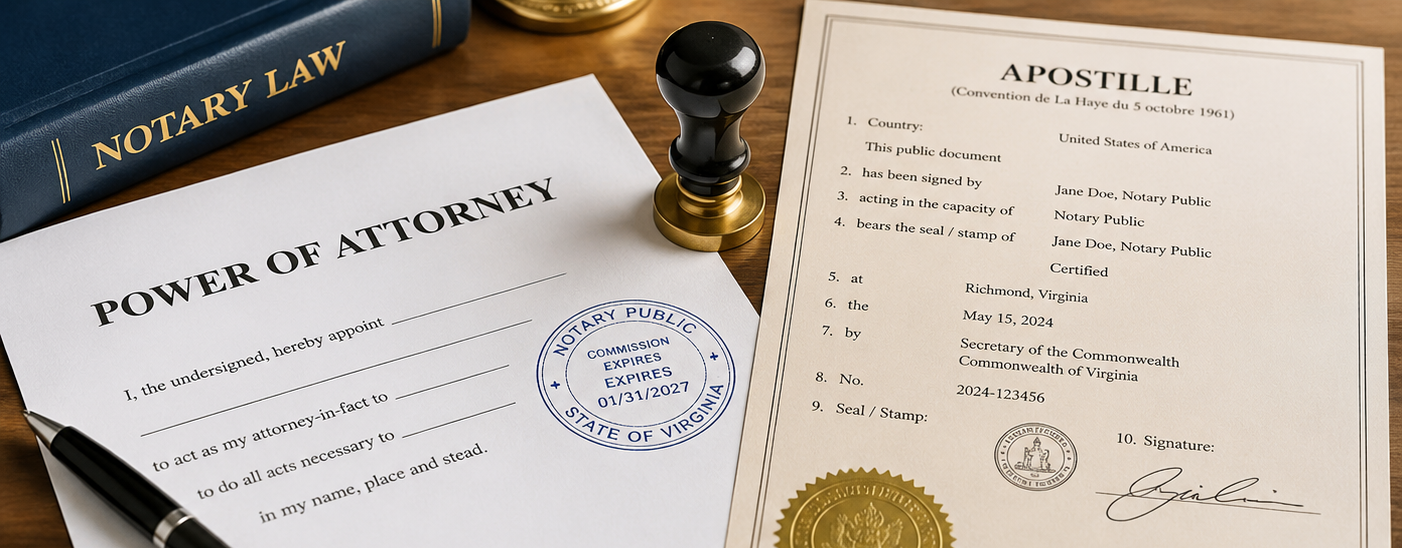
For example, a notarized document may need to be apostilled by the state where the notary is commissioned. A birth certificate usually needs to be handled by the state that issued the certified vital record. An FBI background check may require federal-level processing instead of state processing.
What Is Federal Authentication?
Federal authentication is used when a document must be authenticated through the appropriate federal authority rather than a state office.
This is commonly needed for certain federally issued documents or documents that involve a federal official, agency, or certification.
Federal authentication may apply to:
- FBI background checks
- Federal agency documents
- Certain immigration-related documents
- U.S. Department of State documents
- Documents intended for international use that require federal handling
This is where many clients get confused. Not every document can be processed through a state apostille office. Some documents must go through the federal authentication process, especially when they are issued at the federal level.
Sending a federal document to the wrong state agency can delay your request and cause unnecessary frustration.
The Main Difference Between the Three
Here is the easiest way to understand it:
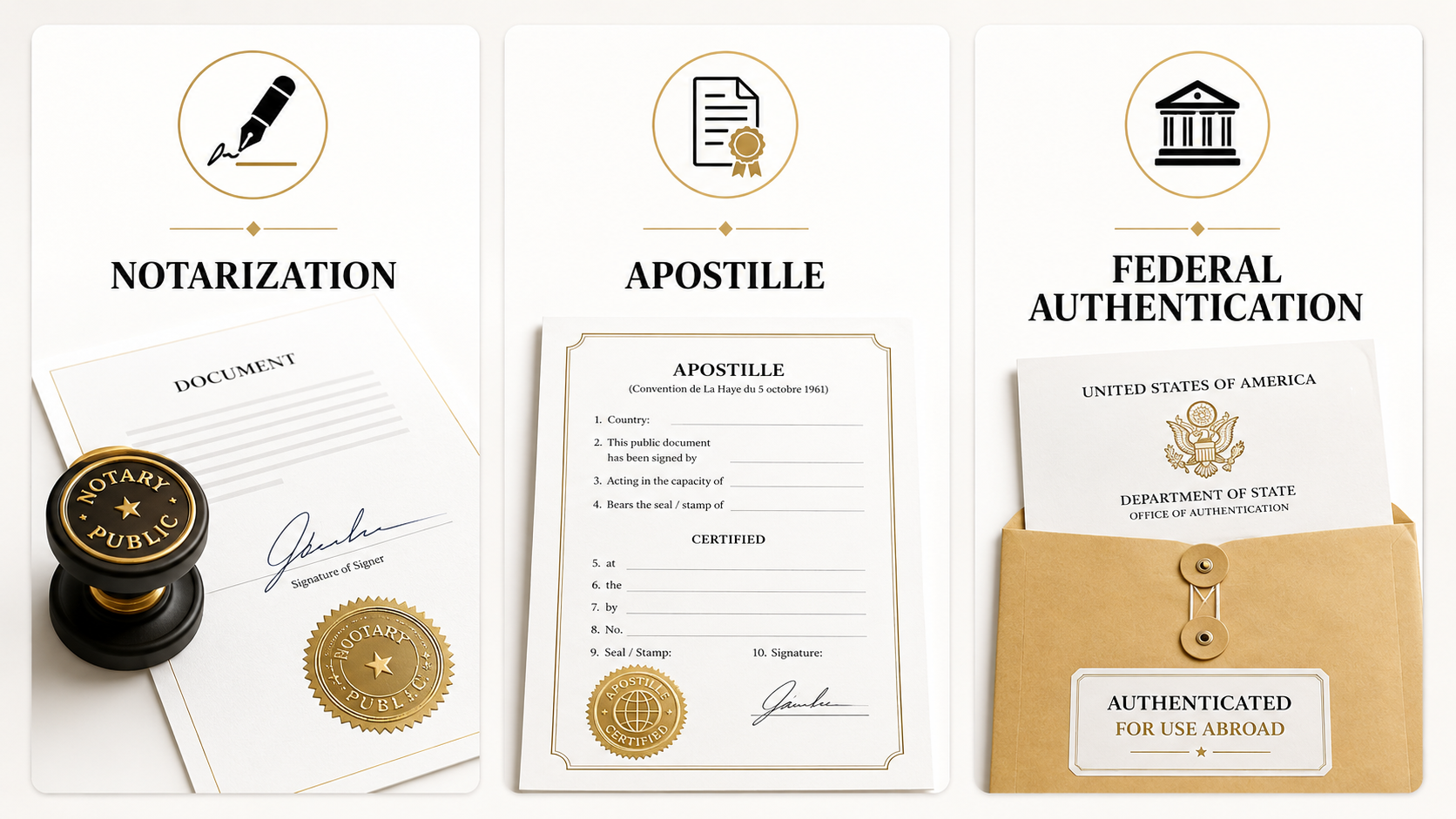
Notarization confirms a signature or notarial act.
Apostille authenticates a public document for use in a Hague Convention country.
Federal authentication authenticates certain federal documents or documents requiring federal-level processing.
Each process has a different purpose, and some documents may need more than one step.
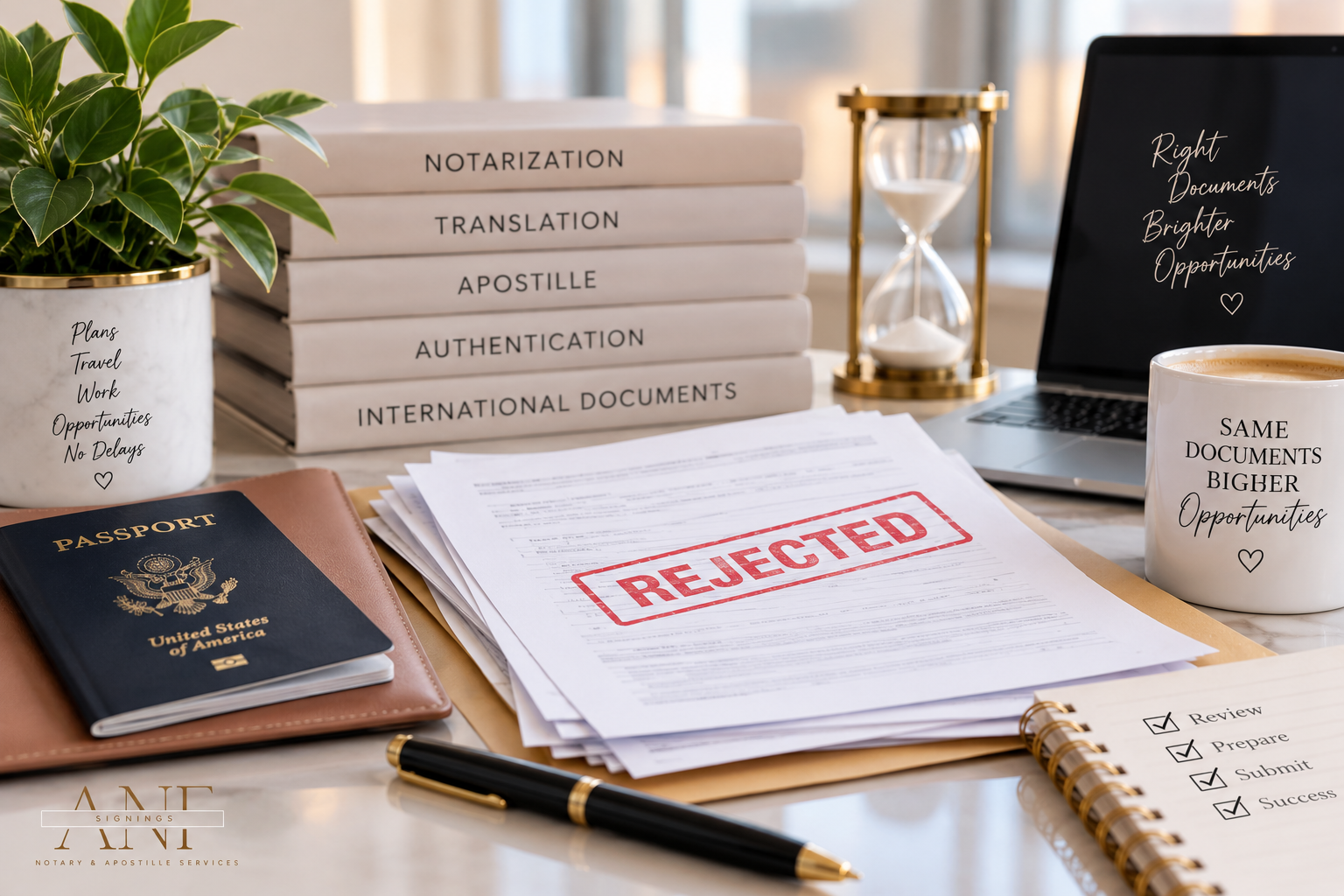
For example, a power of attorney may need to be notarized first and then apostilled. A document going to another country may also need a certified translation. An FBI background check may need federal authentication before it can be used internationally.
Why the Order Matters
The order of the process is extremely important.
Some documents must be notarized before they can be apostilled. Others need a certified copy before submission. Some may need translation before or after the apostille. Federal documents may need to bypass the state level entirely and go through federal authentication instead.
Doing the steps in the wrong order can lead to:
- Rejected documents
- Delayed processing
- Extra fees
- Additional shipping costs
- Paying for the same service twice
- Having to start the process over
This is why a document review before submission is so important.
Common Mistakes Clients Make
Many apostille and authentication delays happen because of simple mistakes, such as:
- Submitting a photocopy instead of a certified copy
- Sending the document to the wrong state or agency
- Getting a document notarized incorrectly
- Forgetting that a certified translation may be required
- Assuming every document needs the same process
- Trying to apostille a document that actually needs federal authentication
- Not confirming the destination country before starting
These mistakes are common, especially for clients who are trying to handle the process alone for the first time.
Which One Does Your Document Need?
The answer depends on your document.
Before starting the process, you should know:
- What type of document you have
- Who issued the document
- Where the document will be used
- Whether it needs notarization
- Whether it needs a certified translation
- Whether the destination country accepts apostilles
- Whether the document should be processed at the state or federal level
If you are unsure, it is better to ask before submitting the document incorrectly.
How ANF Signings Can Help
At ANF Signings Notary & Apostille Services, we help clients understand the correct process before they waste time or money.
We assist with:
- Notarization
- Remote Online Notarization
- Mobile Notarization
- Apostille processing
- Federal document authentication support
- FBI background check authentication support
- Certified translations
- Shipping coordination
- Free document review
Our goal is to help make the process easier from start to finish.
Final Takeaway
Notarization, apostille, and federal authentication are not the same thing.
Your document may need one step, or it may need several steps completed in the correct order. The safest first step is to have your document reviewed before submitting it.
If you are unsure whether your document needs notarization, translation, apostille, or federal authentication, ANF Signings can help.
Don’t guess. Let ANF review it first.
Fill-up the form for a free document check: CLICK HERE
📞 540-242-3477
📧support@anfsignings.com