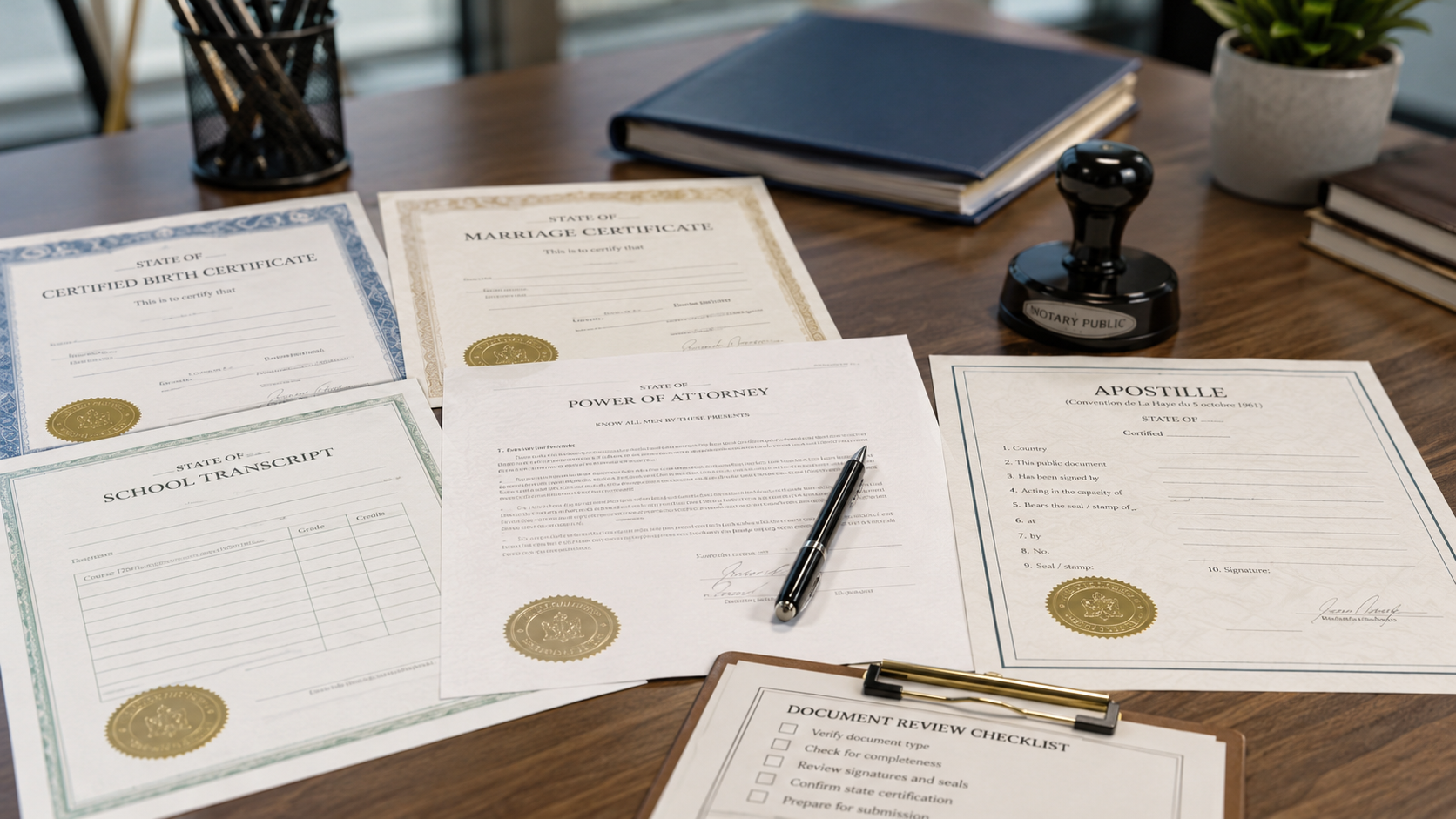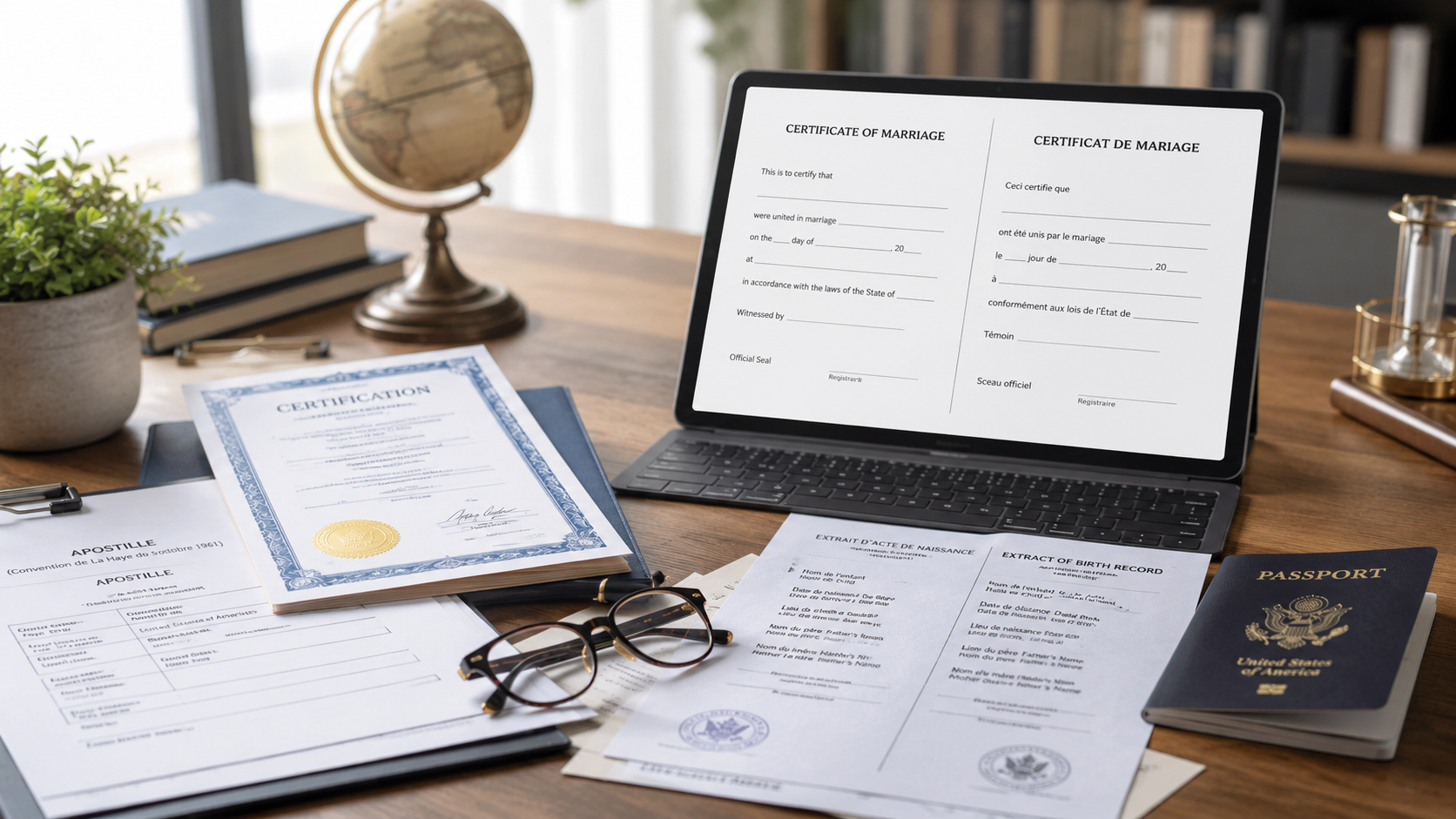
“Does My Power of Attorney Need an Apostille?”
If you have a Power of Attorney that needs to be used outside of the United States, you may be wondering:
Does my Power of Attorney need an apostille?
In many cases, the answer is yes — especially if the Power of Attorney will be used in another country for legal, financial, real estate, business, or family matters.
However, the exact process depends on several important details, including where the document will be used, whether it was notarized correctly, whether the destination country accepts apostilles, and whether certified translation is required.
At ANF Signings Notary & Apostille Services, we help clients review their documents first so they understand the correct next step before submitting, mailing, or translating anything incorrectly.
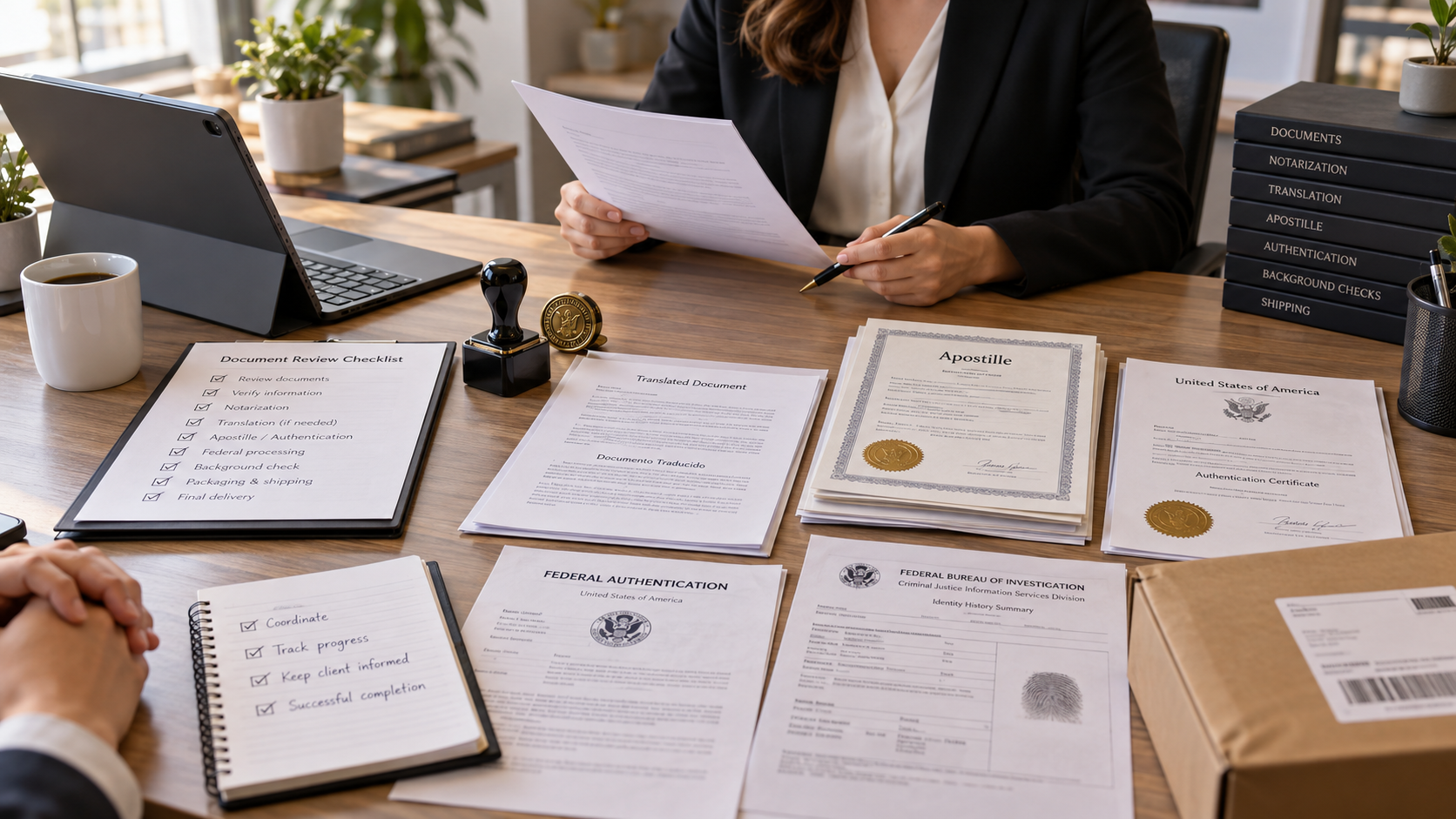
From notarization to translation to apostille — ANF Signings handles the full document process from start to finish.

What Is a Power of Attorney?
A Power of Attorney, often called a POA, is a legal document that allows one person to act on behalf of another person.
A POA may be used for:
- Real estate transactions
- Banking matters
- Business decisions
- Property management
- Family matters
- Vehicle transfers
- Legal representation
- International document signing
- Authorizing someone overseas to act on your behalf
When a POA will be used outside of the United States, the receiving country or agency may require proof that the notarization or official signature connected to the document is valid.
That is where an apostille or authentication may come in.
What Is an Apostille?
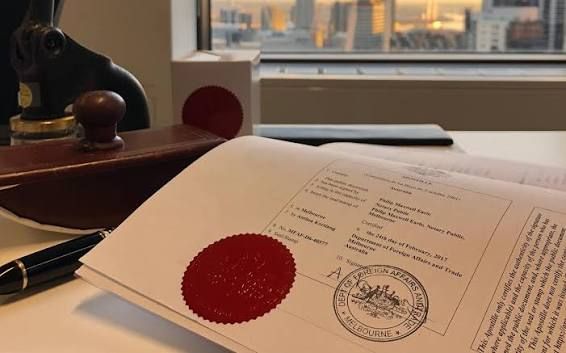
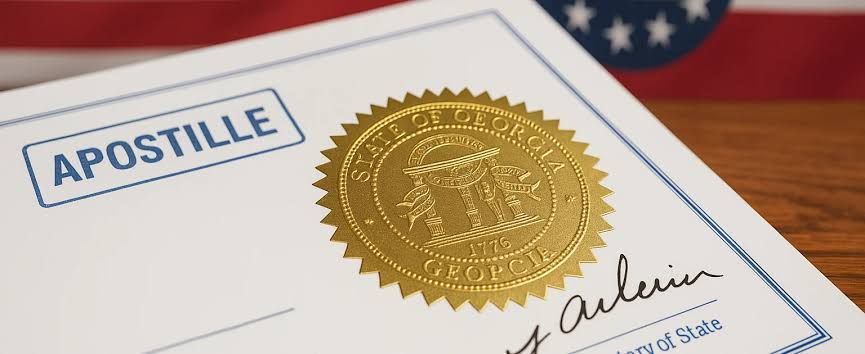
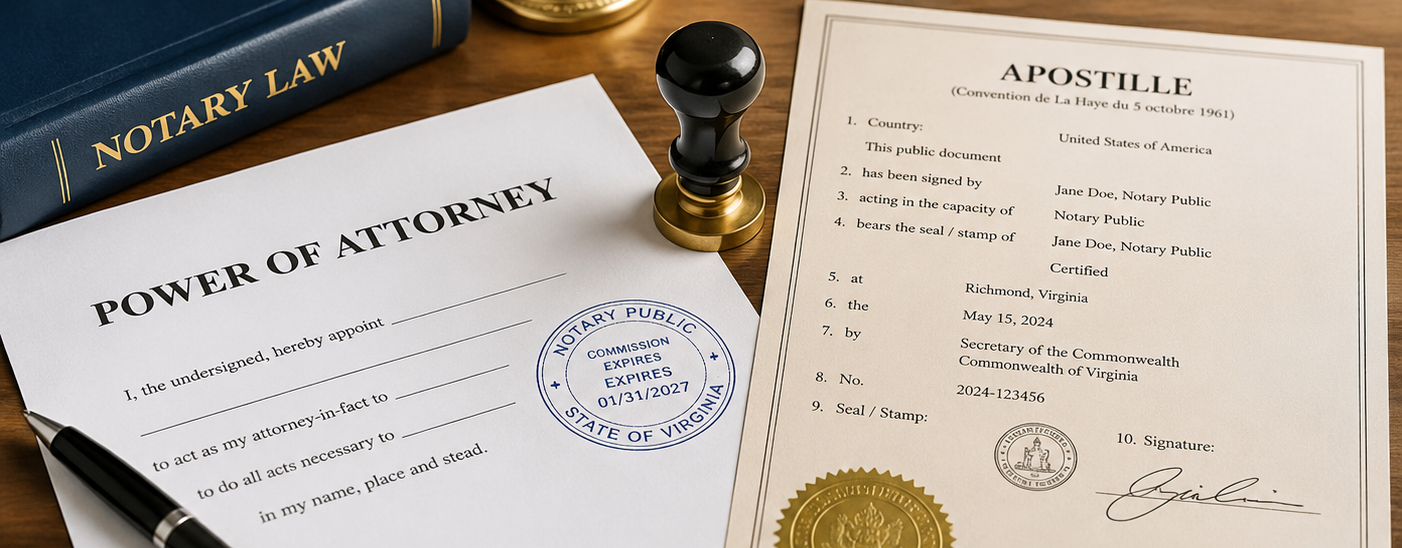
An apostille is a certificate used for documents going to countries that are part of the 1961 Hague Convention Treaty. The U.S. Department of State explains that apostille certificates are used for Hague Convention countries, while authentication certificates are used for countries that are not part of that treaty.
An apostille does not prove that the content of your Power of Attorney is true or legally sufficient for every situation. It verifies the signature, seal, or authority of the public official connected to the document, such as the notary or certifying official. The U.S. Department of State explains that authentication acknowledges the seal and signature of the official, not the document itself.
When Does a Power of Attorney Need an Apostille?
Your Power of Attorney may need an apostille if:
- It will be used in another country
- The destination country is part of the Hague Apostille Convention
- The receiving agency requests an apostille
- The POA was notarized in the United States
- The POA gives someone authority to act internationally
- It will be used for property, banking, business, immigration, family, or legal matters overseas
For example, if you are authorizing someone in another country to sell property, handle a bank account, sign legal paperwork, or manage family matters on your behalf, the receiving party may require the POA to be notarized and apostilled before they accept it.
A Notarized POA Is Not Always Ready for Overseas Use
Many clients assume that once a Power of Attorney is notarized, it is ready to send overseas.
That is not always true.
A notarized POA may still need:
- Apostille processing
- Certified translation
- Federal or state authentication
- Shipping coordination
- Review for notarial wording
- Review for destination country requirements
For a notarized document, Virginia’s Secretary of the Commonwealth states that the document must be properly notarized by a Virginia notary, and the office verifies that the Virginia notary, clerk, or deputy state registrar is listed in its system and issued or notarized the document correctly.
This means the notarization itself must be complete and correct before the apostille process can move forward.
State Apostille vs. Federal Authentication
Most Powers of Attorney are handled at the state level because they are usually notarized by a state-commissioned notary.
If your POA was notarized by a Virginia notary, it would generally go through Virginia’s authentication process. If it was notarized in another state, it would usually need to be processed through that state’s apostille or authentication office.
This is different from federal documents, such as FBI background checks, which may need federal authentication through the U.S. Department of State.
Virginia’s Secretary of the Commonwealth specifically notes that federal documents, including FBI background checks, must be authenticated by the federal Office of Authentications.
The key question is: Who issued, notarized, or certified the document?
Common POA Mistakes That Cause Delays
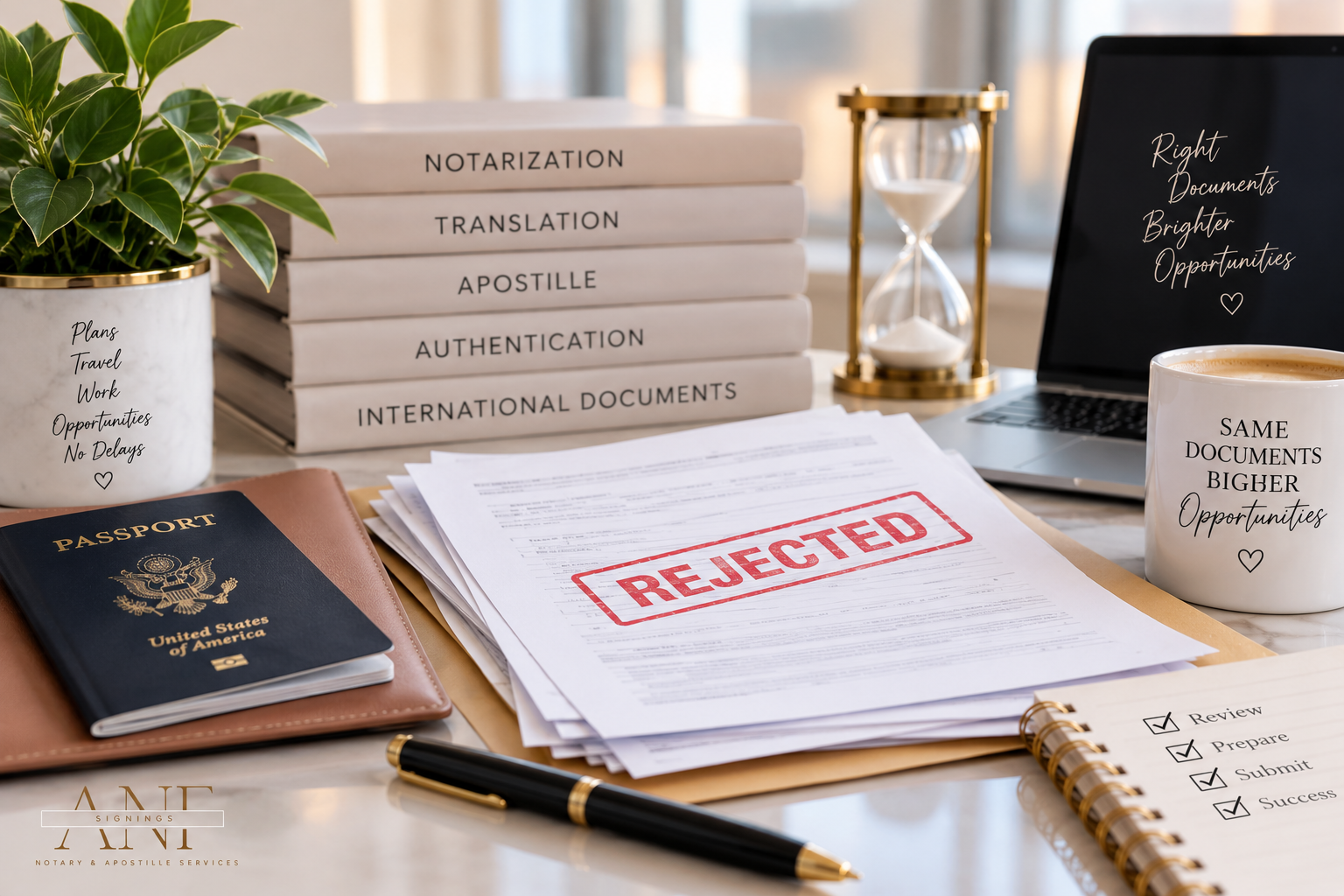
A Power of Attorney may be delayed or rejected if the notarization is incomplete or incorrect.
Common issues include:
- Missing notary signature
- Missing notary seal
- Missing notarial wording
- Missing date
- Missing venue
- Incorrect acknowledgment or jurat
- Name mismatch
- Missing witness information
- Blank spaces left incomplete
- The document was notarized in the wrong state
- The destination country was not confirmed
Virginia lists improper acknowledgments and notarial statements that do not clearly reflect what is being notarized as common reasons documents may be rejected. The office also advises reviewing documents before submission to make sure all information is accurate and present.
Does My POA Need Certified Translation?
Possibly.
If your Power of Attorney will be used in a country where English is not the primary language, the receiving agency may require a certified translation.
The timing matters.
Some documents may need to be apostilled first and then translated. Others may need the translation certified or notarized before submission. The U.S. Department of State advises using a professional translation if the destination country requires translation from English and having the translated copy notarized when required.
Before paying for translation, it is best to review the document and destination requirements first so you do not complete the steps in the wrong order.
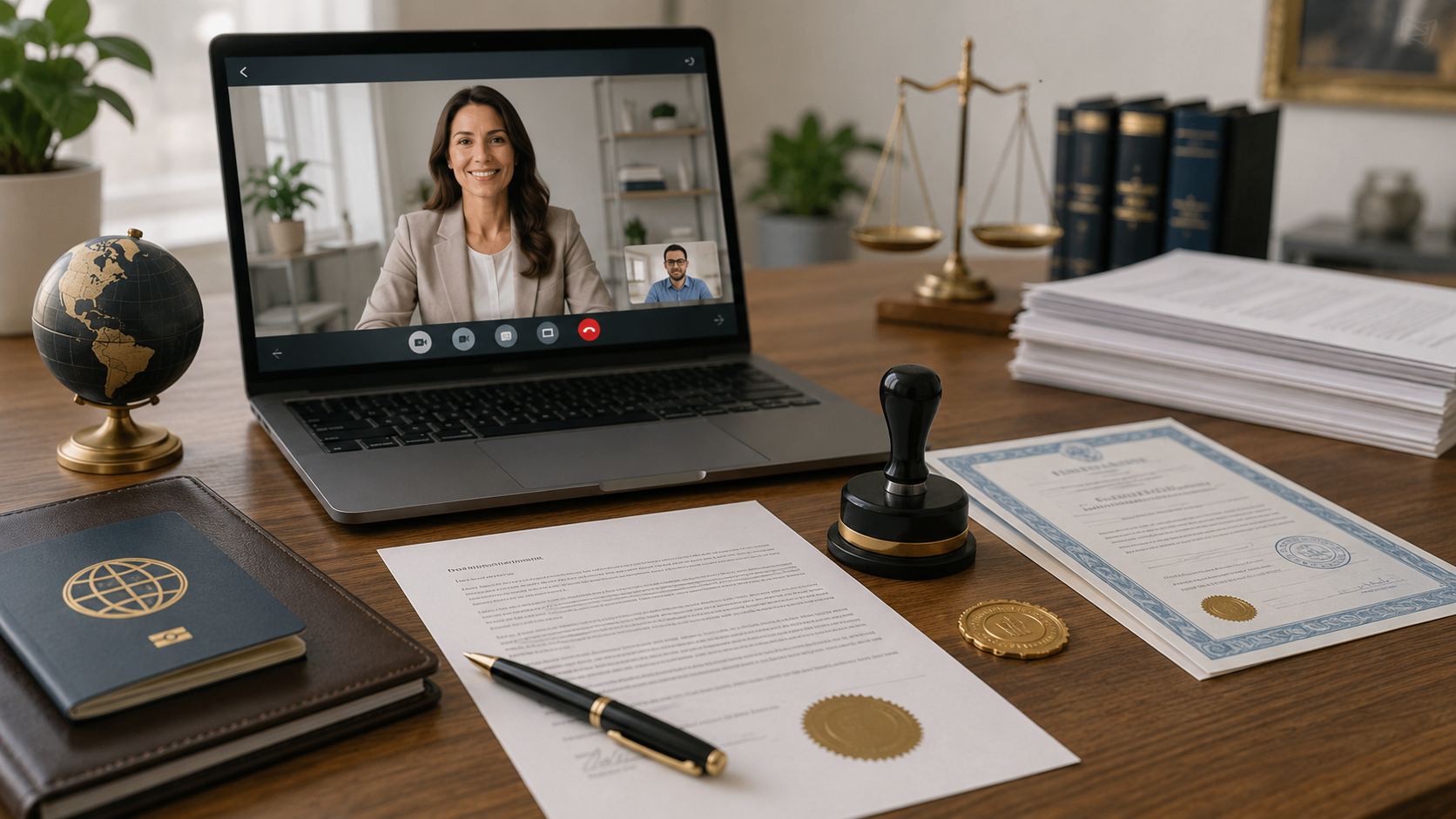
Can a Remote Online Notarized POA Be Apostilled?
This depends on the state, the document type, the format of the notarization, and the receiving agency.
Remote Online Notarization can be convenient for eligible documents, but not every apostille office or foreign agency accepts electronic or remote online notarized documents the same way.
For example, Virginia’s Secretary of the Commonwealth states that it cannot currently authenticate an electronic notarization with an Apostille or Great Seal authentication.
Because of this, it is important to confirm whether RON is appropriate before notarizing a Power of Attorney that will be used overseas.
Questions to Ask Before Apostilling a POA
Before submitting your Power of Attorney for apostille processing, ask:
- What country will the POA be used in?
- Is that country part of the Hague Apostille Convention?
- Does the receiving agency require an apostille or authentication?
- Was the POA notarized correctly?
- Does the notarial certificate include all required information?
- Are witnesses required?
- Does the POA need certified translation?
- Should translation happen before or after apostille processing?
- Was the document notarized in the correct state?
- Does the receiving agency accept remote online notarization?
These questions can help prevent delays, rejection, and unnecessary costs.
How ANF Signings Can Help
At ANF Signings, we help clients understand what their Power of Attorney needs before it is submitted incorrectly.
We assist with:
- Document review
- Power of Attorney notarization
- Remote Online Notarization for eligible documents
- Mobile notarization where available
- Apostille processing
- Certified translations
- Federal document authentication guidance
- Shipping coordination
Instead of guessing whether your POA needs notarization, apostille, translation, authentication, or shipping support, you can start with a document review.
Do Not Guess Your Way Through the POA Apostille Process
A Power of Attorney can be an important document, especially when it involves property, banking, family matters, business, or legal authority overseas.
One missing step can lead to delays, rejection, extra fees, or missed deadlines.
Before you submit, mail, upload, or translate your POA, let ANF Signings review it first.
From notarization to translation to apostille — ANF Signings handles the full document process from start to finish.
Message “REVIEW” for a free document check.
Fill-up the form for a free document check: CLICK HERE
ANF Signings Notary & Apostille Services
📞 540-242-3477
🌐
www.anfsignings.com