How the Destination Country Affects the Apostille Process
When preparing documents for international use, one of the most important questions is:
“What country will this document be used in?”
Many clients assume every document follows the same process, but the destination country can completely change what is required. The country where your document is going may determine whether you need an apostille, federal authentication, embassy legalization, certified translation, notarization, or additional supporting documents.
At ANF Signings Notary & Apostille Services, we help clients understand the correct process before they submit their documents incorrectly.

Why the Destination Country Matters
The destination country matters because not every country accepts documents the same way.
Some countries accept apostilles. Others may require a different authentication or legalization process. Some agencies may require certified translations. Others may have specific rules about how recent a document must be, what type of copy is acceptable, or whether the apostille itself must also be translated.
This is why it is important to confirm the destination country before starting the process.
Apostille vs. Authentication Depends on the Country
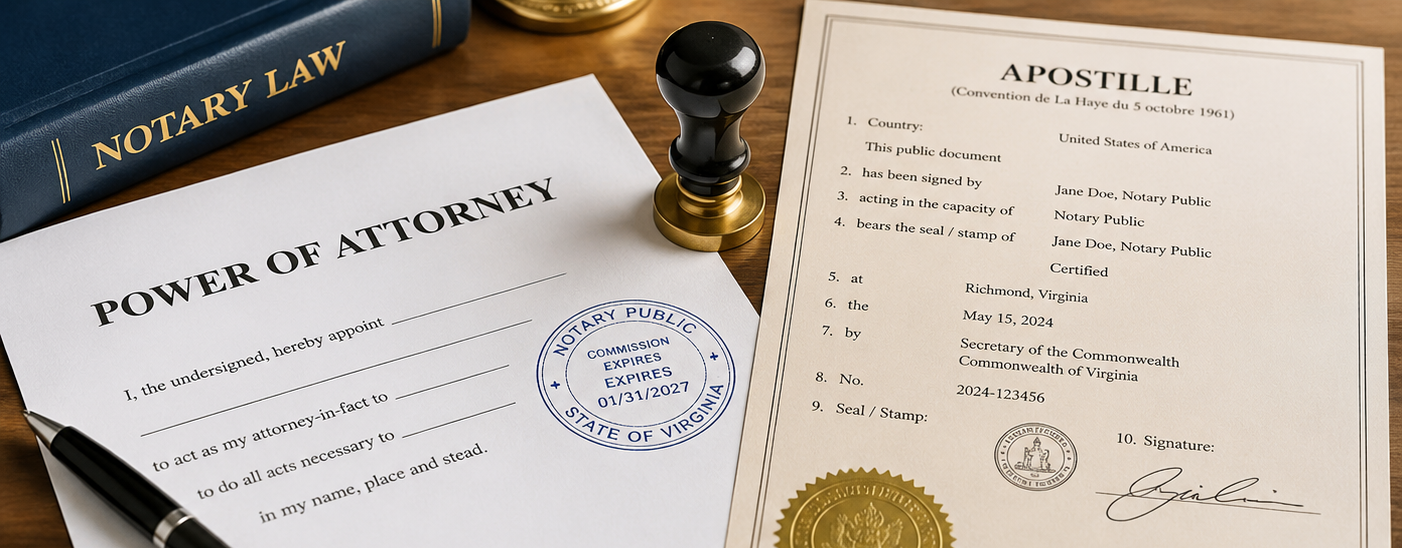
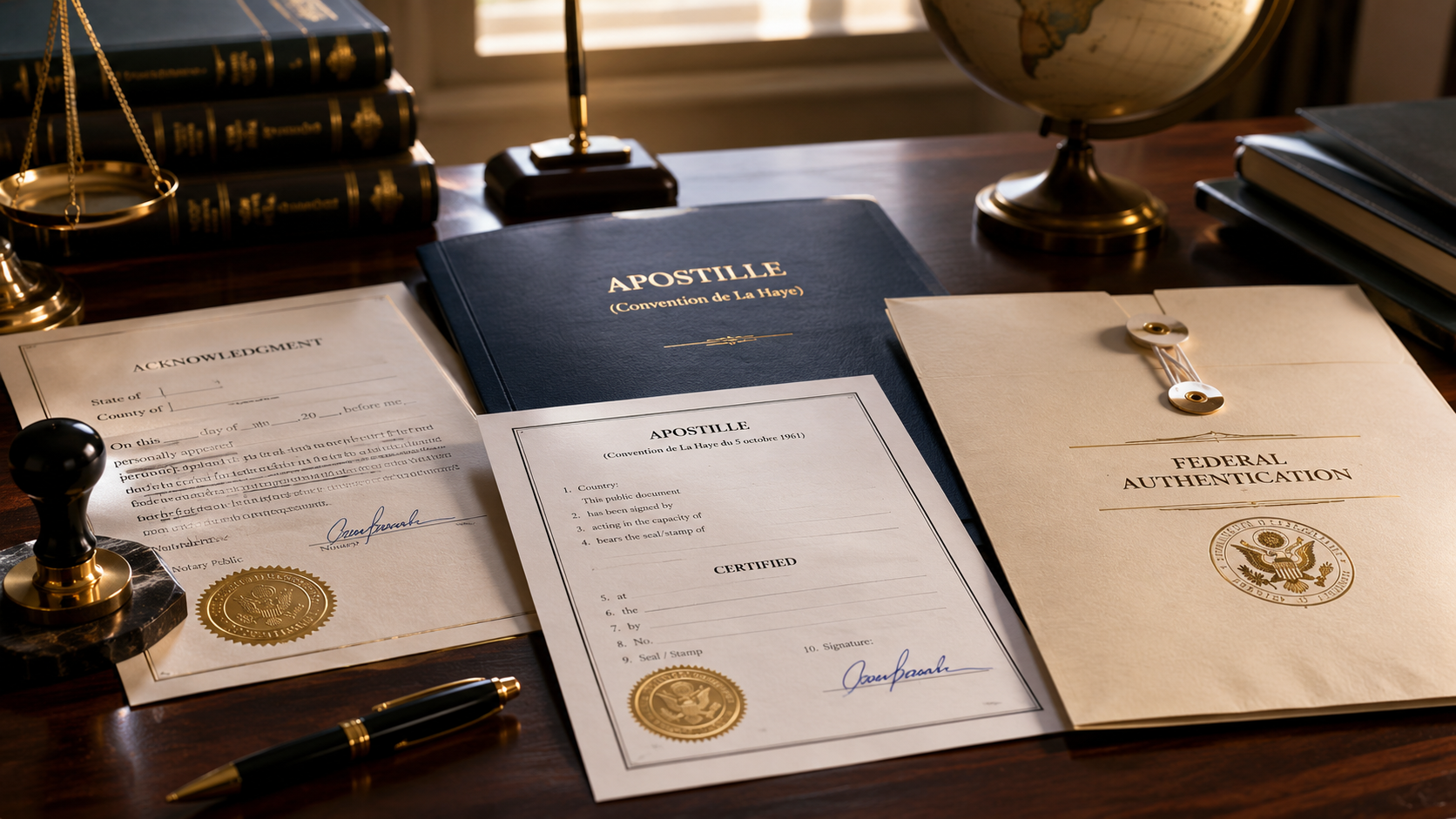
If your document will be used in a country that is part of the Hague Apostille Convention, it may need an apostille.
If the destination country is not part of the Hague Apostille Convention, your document may need authentication or legalization instead.
This is one of the most common areas where clients get confused. A document going to one country may require an apostille, while the same type of document going to a different country may require a different process.
The Country Can Affect Where the Document Must Be Sent
The destination country can also affect where the document needs to be processed.
For example, some documents may be handled by the state that issued the document or where the notarization took place. Other documents, such as certain federal documents, may need to go through federal authentication instead.
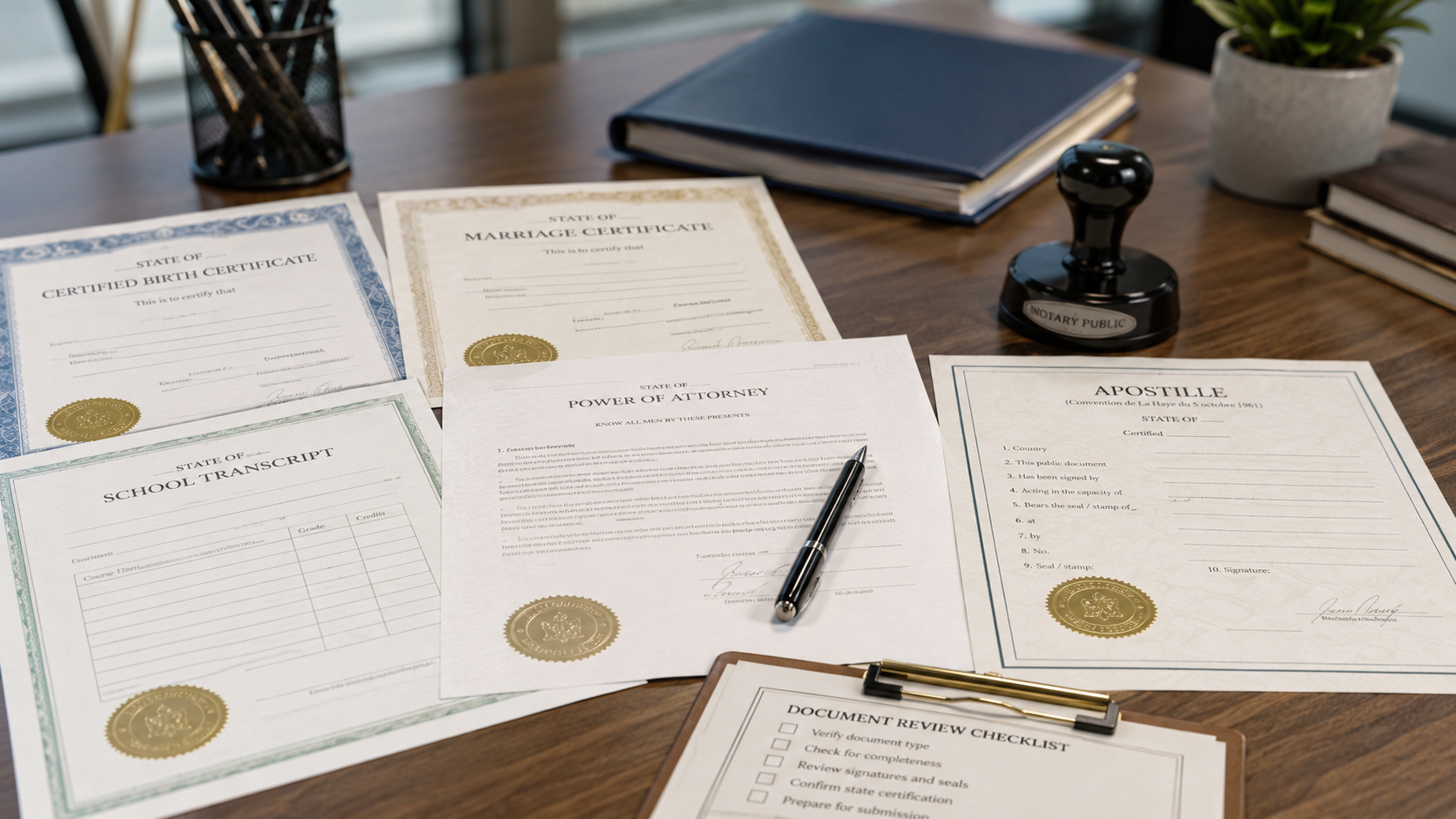
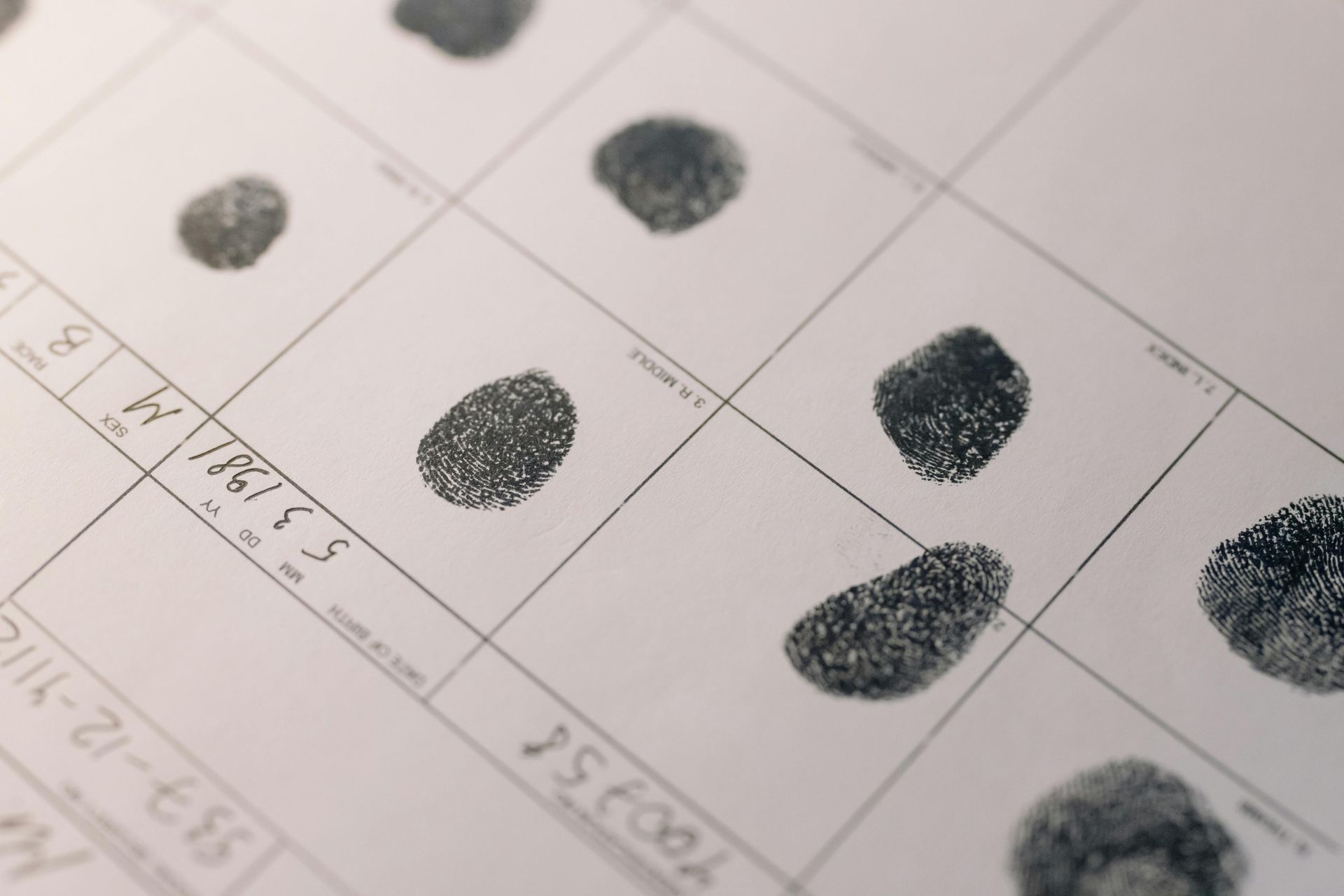
A birth certificate, power of attorney, FBI background check, school record, and business document may all follow different processes depending on where they were issued and where they are being used.
Sending the document to the wrong office can delay the entire process.
Translation Requirements Can Change by Country
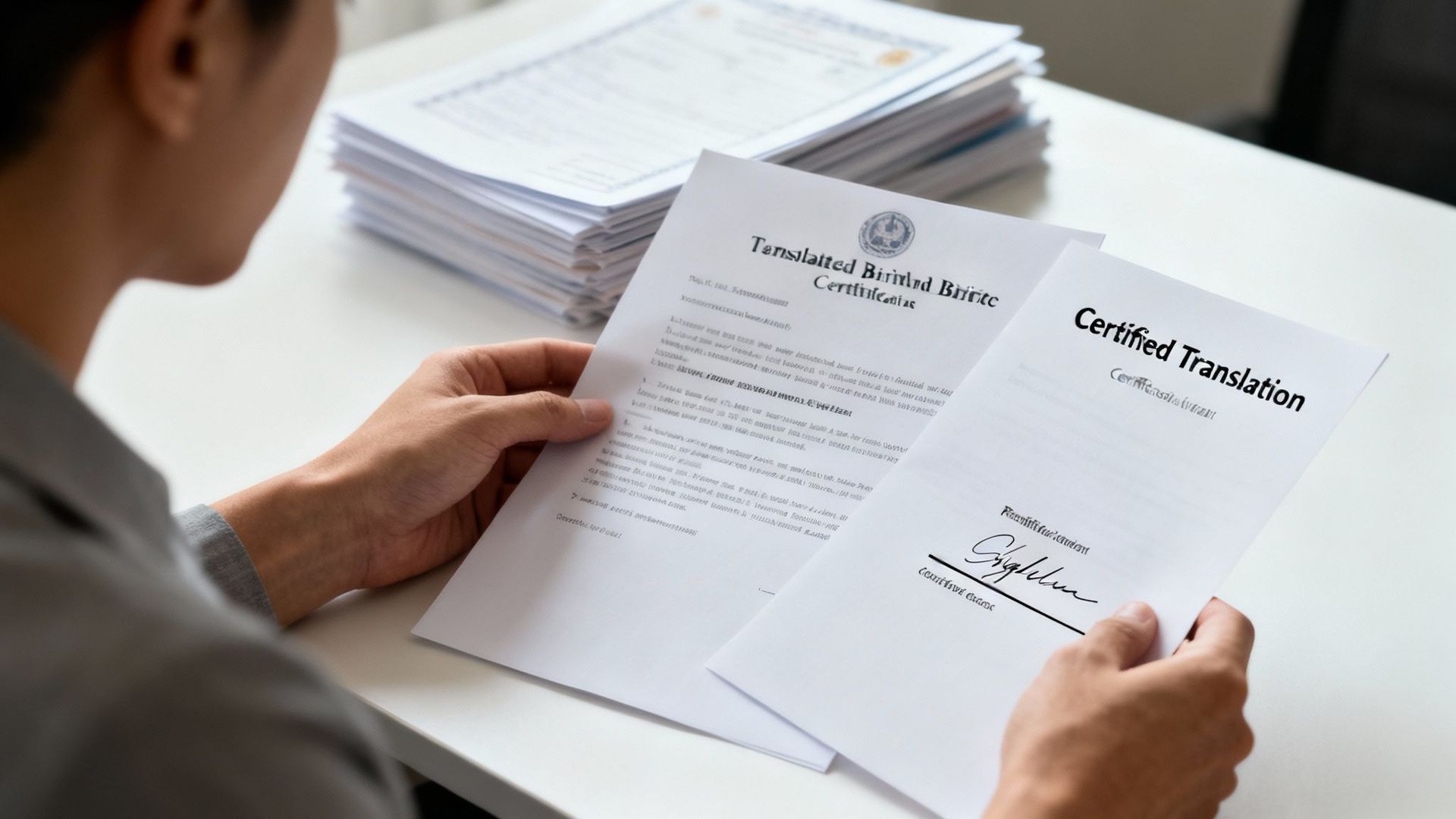
The destination country may also determine whether a certified translation is required.
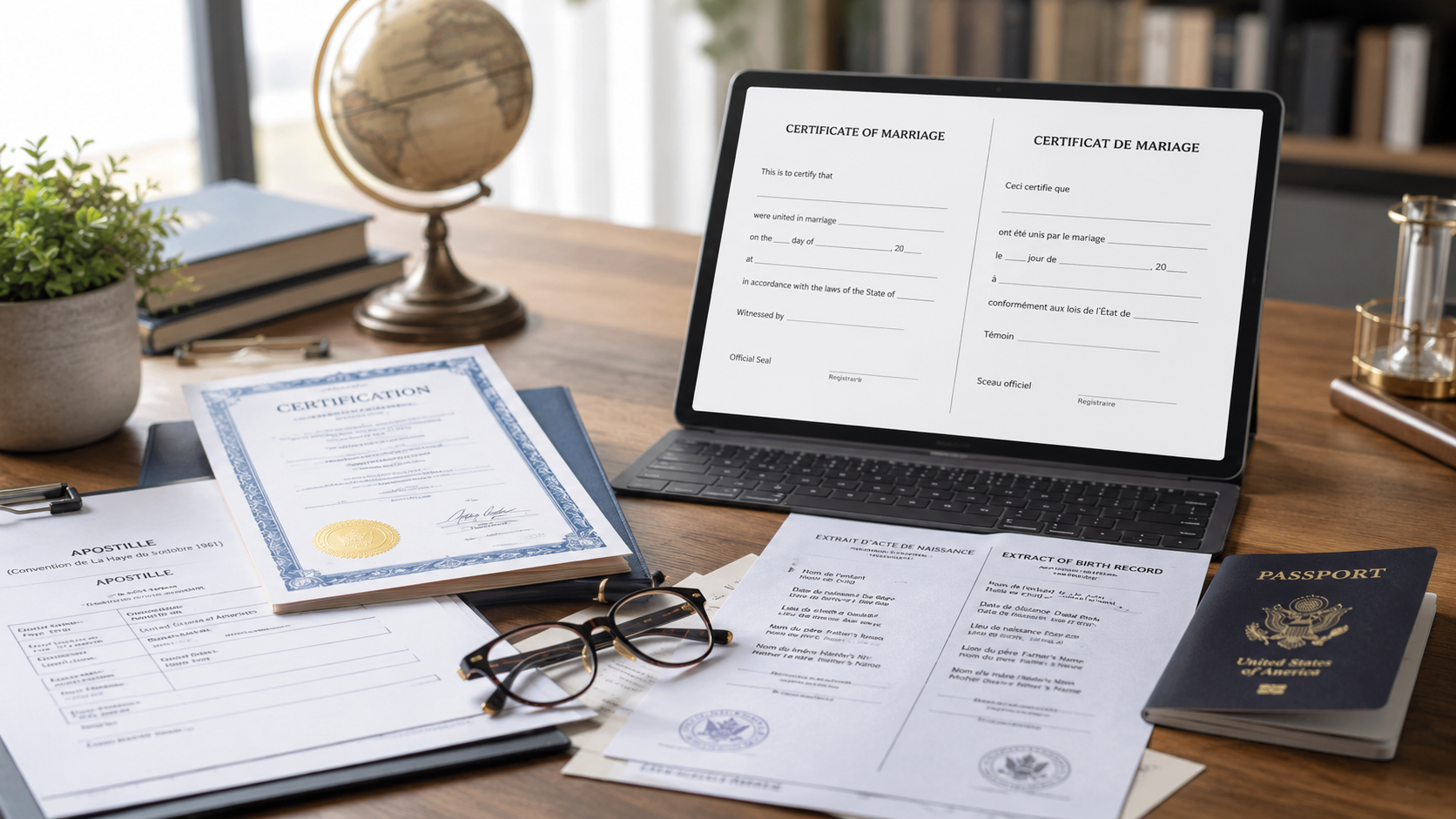
Some countries may accept documents in English. Others may require the document to be translated into the official language of that country. In some situations, the apostille certificate itself may also need to be translated.
This can affect whether the translation should happen before or after the apostille.
For example, some documents are apostilled first and then translated as a complete document package. Other situations may require the translation certification to be notarized and processed separately.
Because requirements can vary, it is important to confirm translation needs before paying for the wrong step.
The Receiving Agency Matters Too
Even within the same country, different agencies may have different requirements.
A school, immigration office, embassy, court, employer, government agency, or business partner may each ask for documents in a specific format.
One agency may request a certified translation. Another may ask for a recently issued certified copy. Another may require the document and apostille to be translated together.
This is why it is not enough to only know the country. You also need to understand who is receiving the document and what they are asking for.
Common Documents Affected by Destination Country Requirements
Destination country requirements commonly affect documents such as:
- Birth certificates
- Marriage certificates
- Divorce decrees
- Power of attorney documents
- FBI background checks
- School records and diplomas
- Business documents
- Adoption documents
- Immigration documents
- Travel consent forms
- Court documents
Each document may need to be reviewed based on the country, document type, issuing agency, and purpose.
Common Mistakes Clients Make
Many delays happen because clients begin the process before confirming the destination country requirements.
Common mistakes include:
- Requesting an apostille when authentication is required
- Sending the document to the wrong state or agency
- Translating the document too early
- Not translating the apostille certificate when required
- Submitting an old or unofficial copy
- Forgetting notarization before apostille processing
- Assuming every country follows the same rules
- Not confirming the receiving agency’s instructions
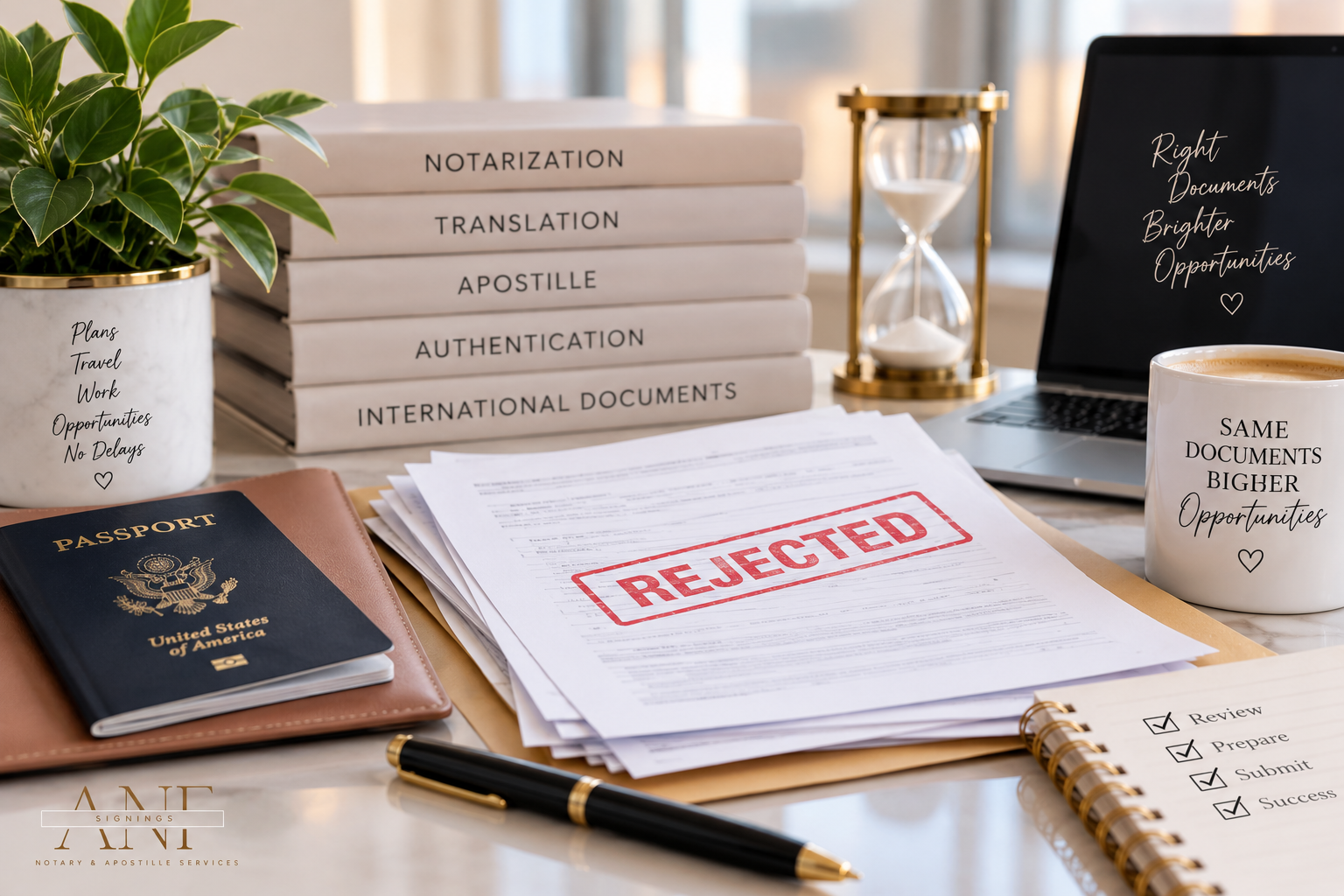
These mistakes can lead to delays, rejection, additional fees, missed deadlines, or having to start over.
Why You Should Review Your Document First
Before submitting your document, it is important to confirm:
- What country the document is going to
- Whether that country accepts apostilles
- Whether federal authentication is needed
- Whether the document needs notarization first
- Whether a certified translation is required
- Whether the receiving agency has special instructions
- Whether the document is the correct version
- Whether shipping or courier coordination is needed
A document review can help identify the correct next step before you waste time or money.
How ANF Signings Can Help
At ANF Signings, we help clients understand how the destination country affects their document process.
We assist with:
- Apostille processing
- Federal document authentication support
- Remote Online Notarization
- Mobile Notarization
- Certified translations
- FBI background check support
- Document review
- Shipping and courier coordination
Whether your document is for immigration, travel, marriage abroad, school, employment, business, adoption, or legal matters, we help guide you through the process from start to finish.
Final Takeaway
The destination country can change everything.
Your document may need an apostille, authentication, certified translation, notarization, or additional processing depending on where it will be used and who is receiving it.
Before you submit your document, do not guess.
Let ANF Signings review your document first and help you understand the correct next step.
Fill-up the form for a free document check: CLICK HERE
📞 540-242-3477
📧support@anfsignings.com